If you run events in the UK, you have probably used Eventbrite or considered it. It is the biggest name in ticketing. But biggest does not always mean best fit, and in 2026 the fee structure deserves a careful look.
This guide breaks down what Eventbrite charges, what the additional costs are, and how the maths plays out on a typical event. No spin, just numbers.
Eventbrite's current fee structure
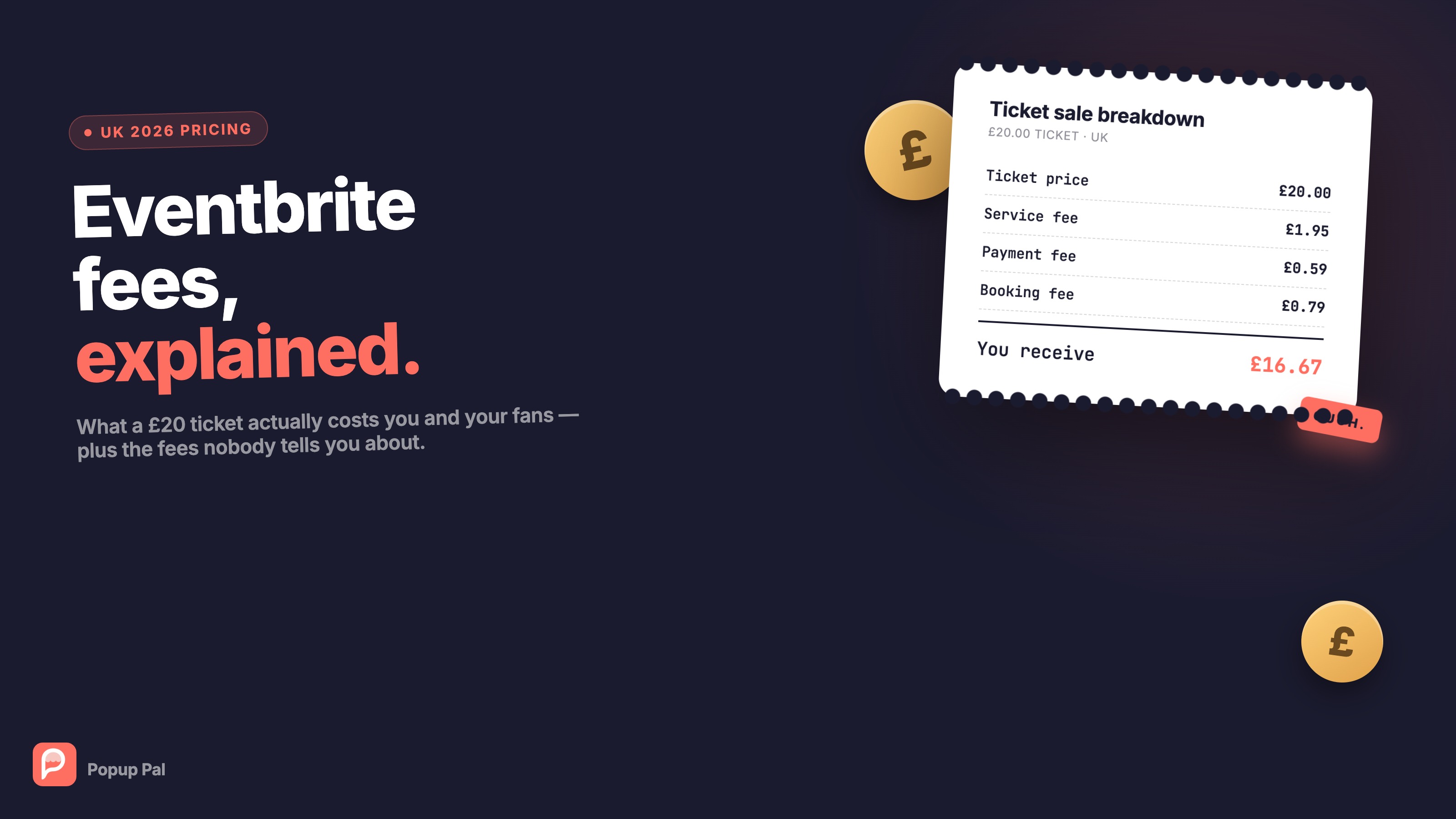
As of 2026, Eventbrite charges UK organisers 6.95% + £0.59 per ticket. That is the platform fee, the cost of using Eventbrite to list and sell.
By default the fee is passed to the buyer. List a ticket at £10 and the buyer pays £11.29 at checkout. Choose to absorb the fee instead and you receive £8.71 per ticket.
Either way, 12.9% of a £10 ticket ends up with Eventbrite. For context, that is nearly double what they charge in the US (3.7% + $1.79), which has frustrated UK organisers for years.
The fixed fee hits cheap tickets hardest
The £0.59 fixed component is particularly punishing on lower-priced tickets.
| Ticket price | Eventbrite fee | Effective % |
|---|---|---|
| £5 | £0.94 | 18.7% |
| £10 | £1.29 | 12.9% |
| £15 | £1.63 | 10.9% |
| £25 | £2.33 | 9.3% |
| £50 | £4.07 | 8.1% |
If you run a community event on £5 tickets, nearly one pound in five goes to Eventbrite. That is a significant slice of revenue for an independent organiser working on tight margins.
The costs beyond the headline fee
The 6.95% + £0.59 figure is the start. Several other costs catch organisers off guard.
Email marketing is paywalled
Eventbrite's free plan includes 250 marketing emails per day. Reasonable on paper, unusable in practice for any event with more than a few dozen attendees. Proper email tools require a Pro plan, which starts at £12 per month and runs up to £78.
Instant payouts cost extra
By default, Eventbrite holds your money for 5 to 7 business days after your event. If you need the cash sooner, to pay your venue or your DJs, you can request instant payouts. There is a 3% surcharge on top of existing fees.
On a £10 ticket, that is £1.29 in platform fees plus £0.30 for instant payout. Over 15% per ticket, gone.
Fees are non-refundable
If you cancel your event, Eventbrite keeps their fee. The buyer gets a refund, but the platform's cut has already been taken. A real risk for organisers who might need to cancel due to weather, venue issues, or low ticket sales.
What changed with the Bending Spoons acquisition
In December 2025, Eventbrite was acquired by Bending Spoons for $500 million, roughly 70% below its IPO valuation. Bending Spoons' track record is worth knowing.
- Evernote. Prices increased 63%, US staff eliminated.
- WeTransfer. 75% of staff cut.
- Meetup. Mass layoffs.
Eventbrite had already raised its fees 11 times since 2007 before the acquisition. The pattern suggests further fee increases are likely, and customer support, already thinned through three rounds of layoffs (45% in 2020, 38% in 2023, 11% in 2024), may get thinner still.
For organisers planning events months ahead, that uncertainty matters. You might list an event today at one fee rate and find the terms have moved by the time the event happens.
How Eventbrite compares to alternatives
Headline fees on a £10 ticket across the major UK ticketing platforms.
| Platform | Fee on a £10 ticket | Effective % | Active marketing |
|---|---|---|---|
| Eventbrite | £1.29 | 12.9% | No |
| DICE | ~£1.10 | ~11% | No |
| Skiddle | £1.25 | 12.5% | No (paid upsell) |
| Fatsoma | £1.00 | 10% | No |
| Ticket Tailor | ~£0.80 | ~8% | No |
| Popup Pal | See pricing | – | Yes |
Real-world example: 300 tickets at £10
A 300-capacity night with £10 tickets is a common setup for independent organisers in the UK.
Across the five percentage-based platforms above, total platform fees range from roughly £240 to £390 on the same event. That is a spread of more than £150 in either direction, on a single show, going to the platform rather than back into the next event.
If you run that show every month, the gap compounds into thousands of pounds across a year. Worth doing the maths on your own numbers before committing.
What else organisers should weigh up
Fees matter, but they are not the whole picture. Three other things are worth thinking about when choosing a platform.
Marketing support
Most ticketing platforms charge fees and leave the promotion to you. Eventbrite is no exception. You list it, you promote it, they take a cut.
A handful of platforms work differently. Active marketing, curated newsletter inclusion, social features, AI-driven recommendations. If filling the room is the part you struggle with, that distinction matters more than a percentage point on the fee.
Audience ownership
On Eventbrite, your fans belong to Eventbrite. Competitor events appear on your event page and on the confirmation page after a buyer completes checkout. You are paying to promote your competition.
Look for platforms where your page shows your events only, and where fans follow you directly.
Payout timing
Eventbrite's 5 to 7 day post-event payout, or 3% for instant, can create real cash flow problems if you need to pay venue hire, staff, or equipment before or immediately after the event. Platforms with near-instant payouts via Stripe Connect remove that pressure.
The bottom line
Eventbrite is a well-known platform with strong SEO and a large user base. For independent UK organisers, especially on tickets under £25, the fees add up quickly. At 12.9% on a £10 ticket, you are giving away a meaningful slice of revenue for a platform that does not help you fill the room.
Worth doing the maths on your specific event and comparing what you would keep elsewhere. The difference is often larger than expected.
Built for every event. Designed for every organiser.
One platform for every kind of event. Active marketing included as standard, fans follow you, payouts are near-instant. See what your event would look like on Popup Pal.
List your event